Compress PDF
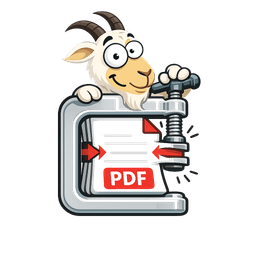
PDF compressor to reduce the size of PDF files quickly and easily.
- Free
- Private
- No limits
- No upload
... or drop files here
Files never leave your device
Add a PDF file to compress.
Frequently asked questions
How much smaller will my PDF get?
It depends on the file. PDFs full of photos or scans often shrink by 50-90%, while a text-only PDF is already small and may barely change.
What do DPI and image quality do?
DPI sets how many pixels each image keeps per inch of the page — 144 is plenty for screens, 300 for printing. Image quality is the JPEG quality used when re-encoding; lower values save more space but soften details.
Will my text stay selectable?
Yes. By default only images are recompressed, so text, fonts and vector graphics stay exactly as they were. Text only becomes pixels if you enable 'Flatten pages to images'.
Is my file uploaded to a server?
No, compression runs entirely in your browser and your file never leaves your device.
Can I compress several PDFs at once?
Yes, add as many files as you like — each is compressed with the same settings and you can download them individually or all together as a ZIP.
Will compressing make my text blurry?
Not with the default settings. Text, fonts and vector graphics are never touched — only embedded images are downscaled and re-encoded, so the text stays sharp at any zoom and remains selectable and searchable. Text only becomes blurry if you enable the rasterise option, which deliberately flattens each page to a picture.
I compressed my file and it barely got smaller. Why?
Because there was little to remove. Compression works by shrinking oversized images, so a document that is mostly text and vectors has almost nothing to give. The tool also keeps the original of any image it cannot shrink by at least 8%, so a file with already-optimised images comes back nearly unchanged rather than being degraded for no benefit.
What DPI should I choose?
150 DPI suits most documents that will be read on screen and printed occasionally. Drop to 96 for screen-only or email, and stay at 300 if the document will genuinely be printed and inspected closely. Lowering DPI saves far more than lowering quality does, so adjust it first.
What does the rasterise option do, and when should I use it?
It re-renders every page as a single flat image, which compresses very hard but destroys the text layer — the result can no longer be searched, selected, copied or read aloud by a screen reader. Reach for it only when the source is a scan made of thousands of small image fragments that normal compression cannot address, and only when you are certain nobody needs the text.
Is there a file size limit?
No enforced limit, because nothing is uploaded. The ceiling is your device's memory. Pages are handled one at a time and capped at 5000 pixels on the longest side, so large documents are processed steadily rather than all at once.
Almost every oversized PDF is oversized for one reason: the images inside it are stored at a far higher resolution than they are displayed at. A phone photo dropped into a report is 4000 pixels wide but occupies four inches on the page, so roughly 90% of the pixels it carries can never be seen. Compression that actually works goes after those, and leaves everything else alone.
That is what this tool does by default. It walks every image inside the document, works out the physical size it is drawn at on its page, downscales it to the resolution you asked for, and re-encodes it as a JPEG. Text, vector graphics, fonts and the page structure are never touched — the document stays fully searchable and selectable, and prints as crisply as it did before.
Where that isn't enough, there is a second, deliberately opt-in strategy that flattens each page into a single image. It compresses far harder and destroys the text layer in the process. The controls make the trade-off explicit rather than hiding it behind a "high / medium / low" dropdown.
How to compress a PDF
Add your PDF
Drop the file in or use Choose file. Its current size is shown once it loads, which is the number you will be comparing against.
Choose a resolution
The DPI setting is the resolution images are reduced to, measured against the space they occupy on the page. 150 DPI is a good default for documents that will be read on screen and printed occasionally; 96 DPI is fine for screen-only; 300 DPI is print quality and will save far less.
Set quality, and grayscale if it applies
Quality controls JPEG encoding. Around 75% is the point where most images stop looking obviously compressed. If the document is a black-and-white scan, turning on grayscale discards the colour channels for a large additional saving at no visible cost.
Compress and compare
The result reports the new size against the original. If the saving isn't enough, lower the DPI before you reach for rasterising — resolution is where the bytes actually are.
What the settings actually do
- DPI (36-600)
- The dots per inch an image is reduced to, relative to how large it is drawn on its page — not the image's own pixel dimensions. This is the single most effective control, because halving DPI removes about three quarters of the pixels. Images already below the target are left alone, and anything smaller than 64 pixels on a side is skipped entirely, since a JPEG header would cost more than the re-encode saves.
- Quality
- The JPEG quality of the re-encoded images, from 0 to 100%. Below roughly 60% the characteristic blocking around high-contrast edges — text inside a screenshot, especially — becomes visible. Above 90% the file grows quickly for very little visible gain.
- Grayscale
- Discards colour and keeps only luminance. For a scanned text document this is close to free: the page was effectively grey already, and dropping the chroma channels cuts a substantial fraction of the remaining data. Obviously destructive on anything where colour matters.
- Rasterise pages
- Re-renders each page as one flat JPEG at the chosen DPI, replacing everything on it. Text stops being text — it becomes pixels, so it can no longer be selected, searched, copied or read by a screen reader. It is the right answer for a scan that arrived as thousands of tiny image fragments, and the wrong answer for almost everything else.
When compression barely helps
A PDF that is already mostly text and vector artwork has very little to give. A 300-page contract might be 2 MB, and nearly all of that is font data and the text itself — there are no oversized images to shrink, so the tool will report a small saving or none at all.
The compressor will not make a file worse in pursuit of a number. Each image is only replaced if the re-encoded version is at least 8% smaller than the original; otherwise the original is kept. That means a document full of well-optimised images can come back essentially unchanged, which is the correct outcome rather than a failure.
If the file is large and compressing does nothing, the weight is probably structural — a huge embedded font set, or an attachment. Web optimize PDF restructures the file itself and may do better on those.
Choosing a resolution for the destination
Resolution only means something relative to how the document will be used. Matching the setting to the destination is more reliable than aiming at a target file size:
- 72-96 DPI
- Screen reading and email attachments. Images stay sharp on a normal display but will look soft if printed or zoomed into.
- 150 DPI
- The general-purpose default. Good on screen, acceptable on an office printer, and typically the point of steepest return on a photo-heavy document.
- 200-300 DPI
- Documents that will genuinely be printed and read closely, or archived. Savings are modest, but a 600 DPI scan reduced to 300 still loses three quarters of its pixels.
Privacy and file size limits
Compression is the tool people most often reach for with documents they would rather not upload — tax returns, medical scans, contracts. Nothing here is uploaded. The decode, downscale and re-encode all happen in your browser tab through its own canvas and image pipeline, and the finished file is handed straight to your downloads.
That also means there is no size cap, only a memory one. Pages are processed one at a time and no page is ever rendered larger than 5000 pixels on its longest side, which keeps even a very large document within what a browser tab will allocate. A file of a few hundred megabytes is realistic on a desktop; a phone will give up sooner.
Information
- Windows
- Linux
- Mac
- iPhone
- Android
How to use Compress PDF
PDF compressor to reduce the size of PDF files quickly and easily.
Many tools available
This site offers numerous tools for working with PDFs — merging, splitting, converting, signing, and more.
Easy to use
PDF Goat 24 makes editing PDFs as fast and simple as possible. There's nothing to install or configure — just use the tool right here.
Works on your system
There are no special requirements. This tool works in any modern browser, on Windows, Mac, Linux, and mobile.
No installation required
You don't need to install any software. Everything runs directly in your browser, right where you are.
Security is important to us
Your files are processed entirely in your browser and are never uploaded to a server, so they always stay private.